
Online Psychedelic Shop

Original price was: $120.00.$105.00Current price is: $105.00.
5 MeO DMT, also known as 5-methoxy-N,N-dimethyltryptamine, is a powerful psychedelic compound belonging to the tryptamine family. It has attracted growing interest from researchers studying psychedelics, serotonin receptors, altered states of consciousness, neurobiology, and potential applications in mental-health research.
Although 5-MeO-DMT is chemically related to N,N-DMT, the two compounds are not identical. They have different molecular structures, pharmacological properties, and reported subjective effects. Understanding those differences is important when researching 5-MeO-DMT and evaluating information found online.
Scientific interest in 5-MeO-DMT has increased in recent years, but many questions about its pharmacology, long-term effects, therapeutic potential, and safety remain under investigation. Research conducted under controlled conditions should also be distinguished from exposure to unidentified or unregulated substances.
This guide explains what 5-MeO-DMT is, how it interacts with the brain, its reported effects, potential risks, testing considerations, drug interactions, scientific research, and legal issues.
5 MeO DMT is a naturally occurring psychedelic tryptamine. Its full chemical name is 5-methoxy-N,N-dimethyltryptamine.
The compound belongs to a broader group of molecules known as tryptamines. This chemical family includes several substances that interact with serotonin receptors and can produce changes in perception, cognition, mood, and consciousness.
5 MeO DMT has been identified in certain plant species and has also been associated with secretions from particular amphibians. However, the existence of a compound in a natural source does not establish that every preparation containing it is safe, standardized, or chemically consistent.
Modern interest in 5-MeO-DMT largely comes from pharmacological and psychedelic research. Scientists are investigating how the compound interacts with serotonin receptors and how those interactions may relate to changes in consciousness and subjective experience.
The name provides information about the molecule’s structure.
5-MeO refers to a methoxy group positioned at the fifth position of the indole ring.
DMT refers to N,N-dimethyltryptamine.
Together, 5-MeO-DMT describes a specific chemical compound rather than a general category of psychedelic substances.
This distinction matters because compounds with similar names can have significantly different effects and risks.
No. 5-MeO-DMT and N,N-DMT are different chemical compounds.
Both belong to the tryptamine family and share some structural characteristics, but the additional methoxy group in 5-MeO-DMT changes its pharmacological profile.
N,N-DMT is commonly associated with vivid visual imagery and complex perceptual experiences. 5-MeO-DMT is often described in research and observational literature as producing a particularly intense alteration of consciousness, sometimes involving substantial changes in ordinary self-awareness.
The distinction is important for scientific research, medical discussions, toxicology, and substance identification.
Information about N,N-DMT should therefore not automatically be interpreted as information about 5-MeO-DMT.
There are several important differences between the two compounds.
Both are tryptamines, but their molecular structures are not identical.
5-MeO-DMT has a distinctive interaction with serotonin receptors, including significant activity involving the 5-HT2A receptor.
N,N-DMT is frequently associated with elaborate visual experiences, while 5-MeO-DMT may produce more profound alterations in self-awareness and consciousness.
Both compounds have been studied scientifically, but they have different research histories and should be considered separately when interpreting scientific evidence.
Neither compound should be assumed to be safe simply because it occurs naturally or has been investigated in scientific studies.
The brain effects of 5 MeO DMT are closely associated with the serotonin system.
Serotonin, also called 5-hydroxytryptamine or 5-HT, is a neurotransmitter involved in numerous neurological processes. These include mood regulation, sensory processing, cognition, sleep, appetite, memory, and perception.
5-MeO-DMT interacts with several serotonin receptors. Its activity at 5-HT2A receptors is especially relevant to psychedelic effects.
However, the effects of a psychedelic compound cannot be explained by a single receptor alone. Researchers continue to investigate how multiple receptor systems, neural networks, and changes in brain communication contribute to the overall experience.
The 5-HT2A receptor is one of several receptors activated by serotonin.
It is found in several regions of the brain and has been extensively studied in connection with psychedelic drugs.
Activation of this receptor is associated with changes in sensory processing, cognition, perception, and consciousness.
Researchers have used pharmacological studies and brain-imaging techniques to investigate how psychedelic compounds influence these systems.
Understanding 5-HT2A activity helps scientists investigate why structurally related psychedelic compounds can produce substantially different experiences.
The effects associated with 5-MeO-DMT can be profound and highly variable.
Reported effects can include:
The intensity and character of an experience can differ substantially from person to person.
Environmental conditions, psychological state, individual biology, other substances, and the actual chemical identity of a product can all influence outcomes.
Psychological effects are among the most significant characteristics of 5-MeO-DMT.
The compound can produce substantial changes in ordinary awareness. An individual may temporarily experience the world and themselves in ways that differ significantly from normal waking consciousness.
Some reports describe substantial changes in the ordinary sense of personal identity.
This phenomenon is sometimes discussed in psychedelic research using terms such as ego dissolution or altered self-processing.
Emotional responses can vary considerably.
Some individuals report feelings described as awe, unity, emotional release, or profound significance. Others can experience fear, confusion, anxiety, or psychological distress.
Sensory perception may change considerably.
The nature of these changes can vary between individuals and between different psychedelic compounds.
Profound alterations in awareness can make ordinary surroundings difficult to interpret.
This can become particularly important when someone is already in an unsafe environment or is unable to communicate effectively.
5-MeO-DMT can also produce physical effects.
Potential effects reported in scientific and observational literature include:
Physical reactions can vary substantially between individuals.
The presence of physical effects does not necessarily indicate a medical emergency, but severe or rapidly worsening symptoms should always be taken seriously.
The timeline associated with 5-MeO-DMT depends on several factors.
These may include:
Some forms of exposure can produce relatively rapid and intense effects with a comparatively short acute period.
However, a short duration does not necessarily mean that the experience is low-risk. A substance capable of producing profound changes in consciousness can still create psychological, physical, or environmental hazards during the period of impairment.
No single experience can be assumed to represent every person’s response.
Several factors can influence psychedelic effects.
Differences in metabolism, genetics, body chemistry, and sensitivity can contribute to different responses.
Mood and expectations can influence subjective experiences.
The surrounding environment can affect how an individual interprets unusual sensory and psychological changes.
Medications, recreational substances, supplements, and other psychoactive compounds can alter effects or increase interaction risks.
An unidentified product may contain compounds other than the substance described on its label.
This is particularly important because a person’s reaction may reflect multiple chemicals rather than 5-MeO-DMT alone.
5-MeO-DMT can produce intense psychological and physical effects.
Potential risks include:
Risk is not determined solely by the chemical itself.
The circumstances surrounding exposure, including other substances and the person’s health, can also be important.
A powerful alteration of consciousness can be psychologically challenging.
Potential psychological problems include:
Some people may also experience lingering emotional or psychological effects following an intense psychedelic experience.
Research into long-term outcomes remains incomplete, so broad claims about either guaranteed benefits or guaranteed harms should be avoided.
Potential physical concerns include changes in:
The possibility of accidents is also important. A person experiencing major changes in awareness may not be able to recognize hazards or respond normally to their surroundings.
Drug interactions are an important area of concern.
5-MeO-DMT affects neurotransmitter systems that can also be influenced by medications and other psychoactive substances.
Potentially relevant categories include:
The exact risk depends on the substances involved, their pharmacology, individual health, and other factors.
People taking prescription medications should obtain professional medical advice about possible interactions rather than relying on generalized online information.
Monoamine oxidase inhibitors, commonly called MAOIs, affect enzymes responsible for breaking down several neurotransmitters and monoamine compounds.
Because of this pharmacological effect, combining MAOIs with certain psychoactive substances can substantially change their activity and may increase risks.
This is an important reason that information about psychedelic combinations should not be treated as a universal safety guide.
Serotonin signaling is central to the pharmacology of 5-MeO-DMT.
The compound interacts with serotonin receptors, and combinations with other substances that strongly influence serotonin can create additional concerns.
Serious symptoms such as extreme agitation, severe confusion, unusual muscle activity, very high body temperature, or rapidly worsening physical condition require urgent medical evaluation.
Psychedelic research has generated interest in whether certain compounds might eventually have therapeutic applications.
However, research findings should not be interpreted as proof that 5 MeO DMT is an established treatment.
Clinical research often includes:
These conditions can be very different from uncontrolled exposure.
Anxiety can occur during an intense psychedelic experience.
The experience may become particularly distressing if someone is confused about what is happening or is in an unsafe environment.
Severe psychological distress, dangerous behavior, loss of consciousness, or rapidly worsening physical symptoms should be treated as potential emergencies.
5-MeO-DMT can significantly alter perception.
Potential changes may involve:
The degree of alteration varies between individuals.
Ego dissolution is a term used in psychedelic research to describe a temporary reduction or disruption of the ordinary sense of self.
Some people describe this as a feeling that boundaries between themselves and their surroundings have changed.
Researchers are interested in this phenomenon because changes in self-processing may help explain some psychedelic experiences.
However, ego dissolution can also be confusing or frightening, particularly when it occurs unexpectedly.
The relationship between psychedelic compounds and psychiatric conditions remains an active research area.
A person’s mental-health history can be relevant when evaluating potential risks.
People with a history of serious psychiatric symptoms should discuss concerns about psychedelic substances with a qualified healthcare professional.
An online article cannot determine whether a particular individual has a safe or unsafe risk profile.
Scientific research into 5 MeO DMT covers several areas.
Researchers investigate receptor activity, metabolism, and interactions with biological systems.
Scientists study how the compound affects brain networks and neural communication.
The intensity of 5-MeO-DMT experiences makes the compound relevant to research into consciousness and self-awareness.
Researchers investigate changes in perception, emotion, cognition, and self-processing.
Researchers are investigating whether psychedelic compounds could eventually contribute to new approaches for certain psychiatric conditions.
This research is still developing, and preliminary findings require further study.
Scientific investigations can examine:
Different studies use different methodologies, so results should be interpreted within the specific research context.
One of the most important distinctions in psychedelic research is the difference between a scientifically characterized compound and an unidentified product.
In controlled research, scientists can establish:
Unregulated products may not provide equivalent certainty.
A product’s name or label does not independently establish its chemical composition.
Analytical testing can provide useful information about chemical identity and composition.
Depending on the technology used, testing may help identify:
However, testing has limitations.
No single consumer-level test should automatically be interpreted as a complete assessment of safety.
Color, texture, packaging, branding, logos, and labeling cannot reliably establish chemical identity.
Two products that look similar may contain completely different substances.
Likewise, products with different appearances may contain the same chemical.
Laboratory analytical methods provide substantially stronger evidence than visual inspection.
Testing methods vary in their sensitivity and specificity.
Some tests may indicate whether a particular compound is present without establishing its complete concentration or identifying every substance in a mixture.
Other analytical techniques can provide much more detailed chemical information but may require specialized laboratory equipment.
Therefore, a single test result should be interpreted according to the capabilities and limitations of the testing method.
Some symptoms warrant immediate medical attention.
Potential emergency signs include:
These symptoms should not simply be dismissed as normal psychedelic effects.
If a person develops severe or rapidly worsening symptoms, emergency medical services should be contacted immediately.
Provide healthcare professionals with as much accurate information as possible about known substances, medications, and circumstances.
Do not assume that a short-acting psychedelic cannot cause a serious medical event.
If someone becomes unconscious, emergency responders should be contacted and appropriate first-aid procedures followed.
The legal status of 5-MeO-DMT differs between countries and jurisdictions.
Some governments regulate it as a controlled substance. Other jurisdictions may have different classifications or restrictions.
Legal rules can also change.
Different activities may be treated differently under the law, including:
Anyone researching the legal status of 5-MeO-DMT should consult current legislation and official government resources applicable to their jurisdiction.
Researchers working with controlled substances may need institutional approval and appropriate regulatory authorization.
Laboratories can also be subject to requirements concerning:
These requirements are separate from informal possession or use.
5-MeO-DMT is a psychedelic tryptamine known scientifically as 5-methoxy-N,N-dimethyltryptamine. It interacts with serotonin receptors and can produce profound changes in perception and consciousness.
No. They are chemically related but distinct compounds with different pharmacological profiles and effects.
It interacts with several serotonin receptors, including 5-HT2A, producing changes in neural signaling associated with perception, cognition, and consciousness.
Potential effects include profound alterations in consciousness, perception, self-awareness, sensory processing, emotional experience, and time perception.
Yes. Although some people report positive or meaningful experiences, others can experience anxiety, fear, confusion, or psychological distress.
Yes. Interactions are possible, particularly with medications or substances that affect serotonin, monoamine metabolism, cardiovascular function, or the central nervous system.
Researchers are interested in its receptor pharmacology, effects on consciousness, brain activity, psychological effects, and possible applications in mental-health research.
No. Appearance, packaging, color, or labeling cannot reliably establish chemical identity.
It can involve significant psychological and physical risks, particularly when the substance is unidentified or combined with other drugs. Severe symptoms require urgent medical attention.
Yes. Psychedelic research includes investigations into possible mental-health applications, but research findings should not be interpreted as proof that 5-MeO-DMT is an approved treatment.
Its legal status depends on the country and jurisdiction. Current local laws and official government information should be consulted.
Anyone researching 5-MeO-DMT should distinguish between several types of information.
Peer-reviewed studies and controlled experiments provide one type of evidence.
Researchers may also study reports and outcomes outside tightly controlled laboratory environments.
Personal experiences can provide context but cannot establish safety or medical effectiveness.
Commercial descriptions may contain claims that have not been independently verified.
Separating these categories helps readers understand what is scientifically established and what remains uncertain.
Psychedelic substances are frequently discussed online using highly simplified descriptions.
For example, a claim that a compound affects a particular serotonin receptor does not automatically explain every psychological or physical effect.
Likewise, an early research finding does not necessarily establish long-term safety or therapeutic effectiveness.
A scientifically responsible approach considers:
5-MeO-DMT’s association with natural sources sometimes creates confusion about safety.
A naturally occurring chemical can still have powerful biological effects.
Natural substances can also vary in concentration and composition.
Therefore, “natural” should not be treated as equivalent to “safe.”
One of the most important issues with unregulated psychoactive products is uncertainty about composition.
A label may not accurately describe the contents.
Potential concerns include:
These uncertainties make it difficult to predict an individual’s response.
5 MeO DMT is a distinctive psychedelic tryptamine that has become increasingly relevant to modern psychedelic research.
Its importance to science comes from several characteristics:
At the same time, important questions remain unanswered.
Researchers continue to investigate long-term effects, mechanisms of action, individual differences, interactions, and the potential risks and benefits of controlled exposure.
5-MeO-DMT is a powerful psychedelic compound belonging to the tryptamine family. Although it is chemically related to N,N-DMT, it is a distinct substance with its own pharmacological properties.
The most important points are:
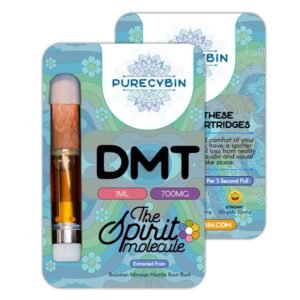
Top Tier 5MeO DMT 1ml Cartridge is a premium option for those seeking a longer-lasting and more powerful psychedelic experience. With 1 full milliliter of high-quality 5-MeO-DMT oil, this vape cartridge provides double the capacity of standard .5ml carts, giving you more value and extended sessions in one discreet and portable design.
High Capacity Cartridge: Packed with 1ml of premium 5-MeO-DMT extract.
Potent & Reliable: Smooth, consistent vapor with every draw.
Discreet & Portable: Compact, travel-ready, and easy to use anywhere.
Top Quality: One of the most trusted Top Tier 5MeO DMT 1ml Cartridge
5-MeO-DMT is an important subject within contemporary psychedelic science because of its distinctive pharmacology and unusually profound effects on consciousness.
However, the scientific picture is still developing. Existing research provides valuable information about receptor activity, subjective effects, neurobiology, and potential applications, but it does not answer every question about long-term safety or therapeutic effectiveness.
Readers should distinguish peer-reviewed scientific evidence from anecdotal reports and commercial claims. They should also recognize that controlled research involving a chemically verified substance is fundamentally different from exposure to an unidentified or unregulated product.
For educational purposes, the most useful approach is to examine 5-MeO-DMT through multiple perspectives: chemistry, pharmacology, neuroscience, psychology, toxicology, research methodology, safety, testing limitations, and applicable law.




Reviews
There are no reviews yet.