
Online Psychedelic Shop

Price range: $110.00 through $800.00
| Bottle Material | Glass |
| Bottle Volume | 1200ml |
| Liquid Color | Brown |
| Ingredients | Plant extracts |
| Packaging | Glass bottle |
| Storage | Cool, dry place |
| Shelf Life | 12 months |
| Features | Blissful state, Improved health, Emotional healing, Past trauma release, Ego dissolution, Enhanced senses, Improved relationships |
Ayahuasca tea is a traditional psychoactive preparation associated with Indigenous and mestizo communities of the Amazon basin. It has attracted international attention because of its historical ceremonial use, profound psychological effects, and growing interest from researchers studying psychedelics, consciousness, mental health, and neurobiology.
Ayahuasca is generally associated with a combination of botanical sources containing N,N-dimethyltryptamine (DMT) and compounds known as beta-carboline alkaloids. These components have an important pharmacological relationship: the beta-carbolines can inhibit monoamine oxidase enzymes, allowing orally administered DMT to become pharmacologically active.
The effects of ayahuasca can be intense and unpredictable. They may involve substantial changes in perception, emotions, thinking, body awareness, and the sense of self. Physical effects can also occur, including nausea, vomiting, changes in heart rate and blood pressure, dizziness, and other physiological responses.
Modern ayahuasca research is investigating its pharmacology, effects on consciousness, psychological outcomes, and possible therapeutic applications. However, scientific research should be distinguished from traditional use, anecdotal accounts, and commercial claims. Preliminary research does not establish ayahuasca as a universally safe or approved medical treatment.
Ayahuasca is a psychoactive botanical preparation traditionally associated with the Amazon region of South America.
The term “ayahuasca” can refer both to the preparation itself and, in some contexts, to one of the plants traditionally used in its preparation. Different communities and traditions may use different botanical combinations.
A commonly discussed pharmacological combination involves:
The precise chemical composition can vary considerably between preparations.
This variation is important because two preparations referred to as ayahuasca may not contain identical concentrations or combinations of active compounds.
The word ayahuasca comes from Quechua linguistic traditions and is commonly translated in ways related to “vine of the soul” or “vine of the dead.”
However, ayahuasca has different names, meanings, traditions, and ceremonial interpretations across Amazonian cultures.
It is therefore more than simply a psychoactive chemical mixture. Its historical context includes Indigenous knowledge, spiritual practices, community traditions, ritual settings, and cultural relationships with plants.
Ayahuasca tea has a long history of ceremonial and traditional use in parts of the Amazon basin.
Traditional practices can involve:
Practices differ substantially among communities.
It is important to avoid treating all ayahuasca ceremonies as identical because traditions can vary according to geography, culture, religious organization, and individual community.
Interest in ayahuasca has expanded beyond its traditional geographic context.
Several factors have contributed to international interest:
However, increased popularity does not mean that every ayahuasca experience is safe or culturally equivalent to traditional practice.
The chemistry of ayahuasca varies.
Many traditional preparations involve a DMT-containing plant combined with a plant containing beta-carboline alkaloids. The exact species and preparation can differ.
Important compounds associated with ayahuasca include:
DMT is a powerful psychedelic tryptamine that can produce major changes in perception and consciousness.
Harmine is a beta-carboline alkaloid associated with monoamine oxidase inhibition.
Harmaline is another beta-carboline compound with monoamine oxidase-inhibiting properties.
Tetrahydroharmine is another alkaloid commonly discussed in relation to ayahuasca pharmacology.
The concentrations and ratios of these compounds can vary.
DMT is one of the best-known psychedelic compounds associated with ayahuasca.
When taken orally by itself, DMT is normally broken down rapidly by enzymes called monoamine oxidases, particularly monoamine oxidase A.
The beta-carboline alkaloids associated with ayahuasca can inhibit monoamine oxidase activity. This pharmacological interaction helps explain why DMT can become orally active in an ayahuasca preparation.
This interaction is one of the most important features of ayahuasca pharmacology.
Monoamine oxidase inhibitors, or MAOIs, are substances that inhibit enzymes responsible for metabolizing various monoamine compounds.
Ayahuasca-associated beta-carbolines have MAO-inhibiting properties.
This creates an important safety consideration because monoamine oxidase participates in the metabolism of numerous substances, including certain medications and dietary compounds.
The MAOI activity of ayahuasca means that drug interactions deserve particular attention.
Ayahuasca affects multiple neurotransmitter systems, with serotonergic signaling playing a major role.
DMT interacts with several serotonin receptors, including 5-HT2A, which is strongly associated with psychedelic effects.
The beta-carbolines add another pharmacological dimension through monoamine oxidase inhibition and interactions with other neurological systems.
Researchers are investigating how these compounds influence:
The complete mechanism of ayahuasca is complex and cannot be explained by a single receptor.
Ayahuasca can produce profound psychological and physical effects.
Possible effects include:
The experience can differ substantially between individuals.
Psychological effects can be among the most significant aspects of an ayahuasca experience.
Sensory information can appear unusually vivid, distorted, or different from ordinary waking perception.
Ayahuasca can substantially alter awareness and the way an individual experiences their surroundings.
People can experience powerful emotions, including happiness, fear, sadness, awe, anxiety, or emotional release.
Some people report temporary changes in their ordinary sense of identity or self.
Ayahuasca experiences are sometimes described as involving intense introspection or autobiographical memories.
However, subjective reports are not equivalent to established clinical outcomes.
Ayahuasca can produce noticeable physical effects.
These may include:
Nausea and vomiting are particularly well-known features of many ayahuasca traditions and are sometimes interpreted culturally or spiritually.
From a physiological perspective, however, vomiting can also create risks such as dehydration or aspiration, particularly if consciousness or coordination is substantially impaired.
Nausea can result from several factors.
Potential contributors include:
The meaning attributed to nausea differs between cultural traditions.
It is important to distinguish cultural interpretations from physiological explanations.
The duration of an ayahuasca experience can vary.
Factors affecting the experience include:
The subjective experience can involve an intense period of altered consciousness followed by a gradual return toward ordinary awareness.
Because preparations vary, there is no single timeline that accurately describes every ayahuasca experience.
Ayahuasca is not a standardized pharmaceutical product in traditional settings.
Different preparations can contain different amounts of active compounds.
Other variables include:
These variables make it difficult to predict precisely how a particular person will respond.
Although ayahuasca has traditional and cultural significance, it can also involve substantial risks.
Potential concerns include:
Risk assessment is particularly important because of the MAOI activity associated with beta-carboline alkaloids.
One of the most important safety considerations involves monoamine oxidase inhibition.
MAO inhibition can affect how the body metabolizes numerous substances.
This means that combining ayahuasca with certain medications or psychoactive compounds can potentially produce serious reactions.
Particular concern may involve substances that affect:
People taking prescription medications should consult a qualified healthcare professional about potential interactions.
Some antidepressant medications influence serotonin or other monoamine systems.
Because ayahuasca contains compounds with MAO-inhibiting activity, combining it with certain medications can present significant interaction concerns.
The exact risk depends on the specific medication, dose, timing, individual health factors, and other substances.
General internet advice cannot safely determine whether a particular medication combination is appropriate.
Serotonin syndrome is a potentially serious condition associated with excessive serotonergic activity.
Symptoms can include:
Severe symptoms can become life-threatening.
Anyone experiencing serious or rapidly worsening symptoms after exposure to ayahuasca or another psychoactive substance should receive urgent medical evaluation.
Ayahuasca has attracted significant interest in mental-health research.
Researchers have investigated whether psychedelic experiences may be associated with changes in:
Some studies have reported promising findings, but research remains limited and methodological differences make broad conclusions difficult.
Ayahuasca should not be presented as an established treatment for a psychiatric condition unless supported by appropriate clinical evidence and regulatory approval.
Researchers have investigated whether ayahuasca may have antidepressant effects.
Some controlled and observational studies have reported changes in depressive symptoms following exposure.
However, research findings need to be interpreted carefully.
Important considerations include:
Preliminary evidence is not the same as an established medical treatment.
Research has also explored possible relationships between ayahuasca exposure and anxiety-related outcomes.
Some observational studies report psychological changes after ceremonial experiences.
However, experiences can vary substantially, and intense psychedelic states can also produce acute fear, anxiety, confusion, or distress.
The scientific literature therefore needs to be interpreted as a whole rather than relying on individual testimonials.
Researchers have investigated whether psychedelic experiences could have relevance to substance-use disorders.
Some observational research has reported associations between ayahuasca ceremonies and patterns of substance use.
However, association does not prove causation.
Controlled research is needed to determine whether ayahuasca has clinically meaningful effects on addiction-related outcomes and under what circumstances those effects might occur.
Ayahuasca is particularly interesting to consciousness researchers because it can produce dramatic changes in:
Scientists use psychedelic states to investigate questions about how the brain constructs conscious experience.
The term ego dissolution is sometimes used in psychedelic research to describe a temporary reduction in ordinary self-boundaries.
People may report that their usual sense of identity feels less distinct.
Researchers are interested in whether changes in self-processing help explain some psychedelic experiences.
However, ego dissolution is not necessarily experienced as positive. It can also be confusing, frightening, or psychologically overwhelming.
Spiritual and religious interpretations are an important part of ayahuasca traditions.
Some people describe experiences involving:
These descriptions are subjective.
Scientific research can study the psychological characteristics of such experiences without determining whether their spiritual interpretations are objectively true or false.
Any discussion of ayahuasca should acknowledge its Indigenous and Amazonian cultural history.
Ayahuasca traditions existed long before modern psychedelic research.
Different Indigenous groups have developed distinct understandings of plants, ceremonies, healing practices, community roles, and spiritual relationships.
Modern international interest can raise questions about:
These issues are increasingly relevant to discussions about the global ayahuasca movement.
Ayahuasca is generally associated with naturally occurring plant compounds.
However, “natural” does not mean automatically safe.
Many naturally occurring chemicals have powerful biological effects.
Safety depends on chemical composition, interactions, individual health, environment, and many other factors.
Appearance alone cannot reliably determine the chemical composition of an ayahuasca preparation.
Color, smell, thickness, or other visual characteristics cannot establish:
Laboratory analysis provides considerably more information than visual inspection.
Analytical testing can be useful for scientific research because it can help determine what compounds are present.
Depending on the analytical method, researchers may investigate:
Different analytical technologies have different capabilities and limitations.
Unlike standardized pharmaceutical products, traditional ayahuasca preparations can differ substantially.
Variation may result from:
This variability makes it difficult to generalize the chemistry of one preparation to all ayahuasca preparations.
Most unpleasant effects are not necessarily medical emergencies, but severe symptoms require urgent attention.
Potential emergency signs include:
Medication interactions can also create serious complications.
If someone develops severe symptoms following exposure to ayahuasca, emergency medical assistance should be sought immediately.
Provide healthcare professionals with accurate information about known substances and medications whenever possible.
Do not assume that vomiting, confusion, or altered consciousness is always a normal part of a psychedelic experience.
If someone is unconscious, appropriate emergency first-aid procedures should be followed while waiting for professional help.
The safety of ayahuasca during pregnancy has not been established.
Because ayahuasca contains pharmacologically active compounds and can produce significant physiological changes, pregnancy represents an important situation requiring professional medical guidance.
People who are pregnant or considering pregnancy should discuss psychoactive-substance exposure with an appropriate healthcare professional.
Ayahuasca can affect cardiovascular function.
Possible changes include alterations in:
People with cardiovascular conditions may therefore have additional concerns.
An online resource cannot determine individual cardiovascular risk.
Neurological reactions to psychoactive substances can vary.
Anyone with a history of seizures or neurological disorders should discuss potential risks with a qualified healthcare professional.
A seizure following ayahuasca exposure is a medical emergency requiring urgent evaluation.
Vomiting and sweating can contribute to fluid loss.
Severe vomiting can become medically significant, particularly if accompanied by confusion, weakness, inability to retain fluids, or other serious symptoms.
Medical attention should be sought when dehydration appears severe.
Modern research into ayahuasca covers several areas.
Scientists study the interactions between DMT, beta-carbolines, serotonin receptors, and monoamine oxidase.
Researchers investigate changes in brain activity and connectivity.
Studies examine perception, emotion, self-awareness, and cognition.
Some research explores potential effects on depression, anxiety, trauma-related symptoms, and substance-use disorders.
Ayahuasca provides researchers with a model for studying altered states of consciousness.
The scientific literature has several limitations.
Research can differ in:
Many studies are observational rather than randomized controlled trials.
This means that researchers must be cautious when interpreting reported associations.
Clinical research and traditional ayahuasca ceremonies are different contexts.
A research study may involve standardized procedures, screening, monitoring, and documented chemical composition.
A traditional ceremony may have cultural, spiritual, and community dimensions that are not present in a laboratory.
Neither context should automatically be assumed to represent the other.
The legal status of ayahuasca varies substantially around the world.
Some jurisdictions regulate DMT as a controlled substance. Other jurisdictions have specific exemptions or legal frameworks associated with religious or traditional use.
Laws can change, and legal treatment may differ between possession, preparation, importation, distribution, religious practice, and scientific research.
Anyone researching ayahuasca law should consult current official government information for the applicable jurisdiction.
Some religious organizations have incorporated ayahuasca into ceremonial practices.
In certain jurisdictions, legal protections or exemptions may apply to specific religious groups under particular circumstances.
These protections are not universal.
A religious organization’s claim that a practice is protected does not necessarily mean the same activity is legally protected everywhere.
Researchers studying DMT-containing preparations may need to comply with controlled-substance laws and institutional requirements.
Depending on the jurisdiction, research can involve requirements related to:
Researchers should follow the regulations applicable to their institution and location.
Ayahuasca is a traditional psychoactive botanical preparation associated with Amazonian cultures. It is commonly associated with DMT-containing plants and beta-carboline alkaloids that inhibit monoamine oxidase.
DMT is the primary psychedelic compound commonly associated with the psychoactive effects of ayahuasca.
Beta-carboline alkaloids can inhibit monoamine oxidase, reducing the breakdown of DMT and allowing it to become orally active.
No. DMT is a specific chemical compound, while ayahuasca is a botanical preparation containing DMT alongside other compounds.
Possible effects include major changes in perception, consciousness, emotion, self-awareness, and sensory processing. Physical effects such as nausea, vomiting, dizziness, and changes in heart rate or blood pressure can also occur.
Ayahuasca can produce significant perceptual changes, including visual and other unusual sensory experiences. The character and intensity vary between individuals.
Nausea and vomiting can result from the pharmacological effects of the compounds in a preparation as well as individual physiological responses. Some traditions also attach cultural or spiritual meanings to vomiting.
Yes. Because ayahuasca-associated beta-carbolines have MAO-inhibiting activity, interactions with certain medications and other substances can be important.
Safety depends on many variables, including chemical composition, individual health, medications, other substances, and setting. Ayahuasca can produce serious psychological or physical reactions and should not be assumed to be universally safe.
Yes. Researchers are investigating its pharmacology, neuroscience, psychological effects, consciousness-related effects, and potential therapeutic applications.
Legal status varies by country and jurisdiction. Laws may also distinguish between DMT itself, botanical preparations, religious practices, and scientific research.
Ayahuasca does not have the same established dependence profile as many classic drugs of addiction, but this does not mean that every pattern of use is risk-free. Research into psychological and behavioral outcomes continues.
Yes. It can produce intense psychological effects. Research is also investigating possible longer-term psychological outcomes, but evidence remains developing and should not be treated as proof of an established medical treatment.
Ayahuasca occupies a unique position at the intersection of traditional culture, pharmacology, psychedelic science, spirituality, and public health.
Several points are particularly important.
First, ayahuasca is not simply another name for DMT. It is a complex botanical preparation whose effects arise from interactions between multiple compounds.
Second, the chemical composition of preparations can vary. This makes broad claims about every ayahuasca experience unreliable.
Third, the MAOI activity associated with beta-carbolines creates important interaction considerations.
Fourth, scientific research into potential therapeutic applications is still developing.
Finally, traditional ayahuasca practices should be understood within their cultural and historical context rather than being reduced to a purely recreational or commercial product.
Ayahuasca is a traditional psychoactive preparation with a long history in parts of the Amazon basin and a growing presence in modern psychedelic research.
The key facts include:
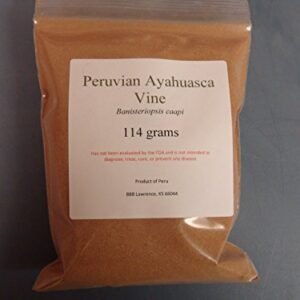
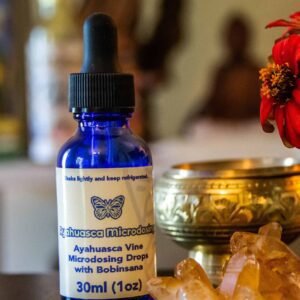
Do you want to buy ayahuasca online? At Mega Psychedelic Shop, we have the authentic and high-quality ayahuasca tea for sale. It is a powerful herbal tea that has been used for spiritual and healing purposes by indigenous tribes in the Amazon Basin for centuries. This drink is brewed using leaves from the Psychotria Viridis shrub and stems from the Banisteriopsis caapi vine. The mix of these ingredients results in a powerful combination with psychoactive effects. Ayahuasca Tea is popular for its intense hallucinogenic effects. Some users of the herbal tea claim that they feel self-discovery and spiritual enlightenment. However, the point is noted that herbal tea should be used responsibly.
Buy ayahuasca online from us and immerse your senses in the ancestral wisdom of Ayahuasca with our all-natural, organic Herbal Tea. Each sip is a step towards tranquility, offering not just a unique taste but also a window into the profound mysteries of traditional healing. Our ayahuasca herbal tea is a blend of the purest. Organically it is grown ingredients, exemplifying nature’s profound potency. Coming fresh from vibrant rainforests, it promises a cup that is clean and untouched.
This ancient remedy is known for its health and wellness benefits. The benefits include aid in digestion and stress alleviation. Also, it is an ideal partner for your wellness-focused lifestyle. Savor a flavor free from artificial adulteration that refreshes your taste buds and revitalizes the soul. Our commitment to ethical sourcing ensures that our tea not only appeases the senses but also respects the earth and its inhabitants. Each ayahuasca trip supports sustainable production practices and benefits local communities, contributing to a holistic cycle of goodness.
When looking for where to buy ayahuasca online may seem like a convenient choice. It is noted that one must be conscious about the side effects of the product. Moreover, the authenticity and safety to purchase ayahuasca online can’t always be guaranteed. Hence you need to be cautious where to buy ayahuasca tea online since there are a good number of pirated sites.
Dosage of this tea is critical and should be approached with respect and mindfulness. Typically, our team recommends starting with a small amount to understand how your body reacts to the blend. After gauging your individual response, the dosage might be adjusted under professional guidance. Please note that ayahuasca herbal tea is potent, and its consumption should always be carried out in a safe and supportive environment. So after knowing about these take our ayahuasca for sale offer.
The ayahuasca herbal tea isn’t just a beverage; it’s an authentic ceremonial encounter captured in a cup that is designed for those who appreciate the convergence of heritage and holistic health, and who seek a touch of the sacred in their daily routine. You don’t need to seek more about where to get ayahuasca tea online.
Ayahuasca Tea is a complex subject that cannot be adequately explained through a simple description of its psychedelic effects.
Its history includes Indigenous and Amazonian traditions, while modern research examines the pharmacology of DMT and beta-carboline alkaloids and their relationship to consciousness and psychological experiences.
At the same time, important uncertainties remain concerning long-term outcomes, individual risk factors, interactions, preparation variability, and potential therapeutic applications.
Readers should distinguish established scientific findings from anecdotal reports, spiritual interpretations, and commercial claims. Research conducted under controlled conditions also should not automatically be treated as evidence that an unidentified or unregulated preparation is safe.
For an evidence-focused understanding of ayahuasca, it is useful to consider its chemistry, pharmacology, traditional context, psychological effects, physical risks, medication interactions, research evidence, testing limitations, and applicable laws together.
| Quantity | 1 Bottle, 2 Bottles, 5 Bottles, 10 Bottles |
|---|

Reviews
There are no reviews yet.