
Online Psychedelic Shop
Price range: $175.00 through $1,020.00
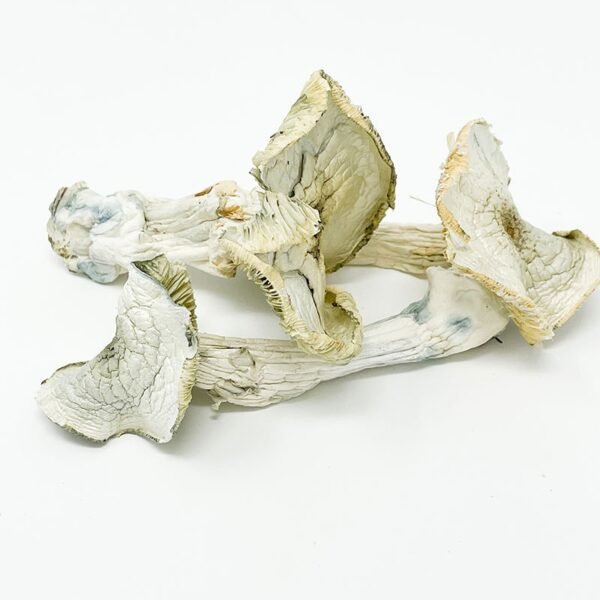
Albino A+ Mushrooms is a commonly recognized name associated with a pale or leucistic form of Psilocybe cubensis, a psychedelic mushroom species known for naturally occurring compounds including psilocybin and psilocin. Unlike a formally established separate species, Albino A+ is generally discussed as a named variety or phenotype within the broader P. cubensis group.
Its distinctive appearance has made Albino A+ a subject of interest among mycology enthusiasts and researchers studying mushroom genetics, morphology, and psychedelic compounds. At the same time, scientific literature on individual informal varieties remains considerably more limited than the literature concerning Psilocybe cubensis as a species or psilocybin as a chemical compound. A recent review specifically notes substantial variation among P. cubensis strains and identifies the need for more rigorous academic documentation of these varieties.
Albino A+ is a commonly used name for a pale-colored Psilocybe cubensis variety or phenotype. The term “magic mushroom” generally refers to mushrooms containing psychedelic compounds, particularly psilocybin.
The defining feature associated with Albino A+ is its reduced visible pigmentation. Specimens are often described as having pale or whitish caps and stems. However, coloration alone does not establish the precise genetic identity, species, or chemical composition of an individual mushroom.
This distinction is important because informal mushroom variety names are not equivalent to standardized pharmaceutical specifications. A name can describe a recognized community phenotype without guaranteeing identical chemical characteristics between every specimen.
Psilocybe cubensis is a species of fungus belonging to the genus Psilocybe. It is widely known because some members of the species produce psilocybin and related tryptamine compounds.
The species has become an important subject of research involving:
Scientific interest has increased as researchers develop more sophisticated methods for analyzing mushroom chemistry and understanding the biological effects of psilocybin.
The history of Albino A+ mushrooms is primarily associated with the development and exchange of named P. cubensis varieties within mushroom communities.
Unlike formally described fungal species, many named P. cubensis varieties have histories that are difficult to document using conventional taxonomic literature. A recent scientific review notes that many recognized P. cubensis strains have been documented largely through community-based sources and that formal academic characterization remains incomplete.
For this reason, claims concerning the precise origin, genetics, or historical development of Albino A+ should be treated cautiously unless supported by documented scientific evidence.
Albino A+ is generally associated with the following classification:
The important distinction is that Albino A+ is a variety or phenotype designation rather than a separate scientific species.
The term “Albino” is generally used to describe the unusually pale appearance associated with this variety. The “A+” component is part of the established informal name.
The terminology should not be interpreted as a measurement of potency, purity, or chemical composition.
In biological research, pigmentation and psychoactive-compound concentration are separate characteristics. A mushroom can look particularly pale without necessarily having a predictable concentration of psilocybin.
Albino A+ is primarily distinguished by its light coloration.
Commonly described characteristics include:
Individual mushrooms can vary, so these characteristics should be regarded as descriptive rather than definitive identification criteria.
The cap is one of the most visually distinctive parts of the mushroom.
Albino A+ mushrooms specimens are commonly described as having pale, cream-colored, or nearly white caps. Shape and surface characteristics can change as the mushroom develops.
Environmental conditions and genetic variation can also influence morphology, meaning that not every specimen will have an identical appearance.
The stem of Albino A+ mushrooms are generally described as pale or lightly colored.
Stem morphology can be useful when studying fungal characteristics, but stem color alone cannot establish species identity or chemical composition.
Scientific identification normally considers multiple characteristics simultaneously.
Gills are located underneath the mushroom cap and contain the reproductive structures responsible for producing spores.
Their appearance can change as the mushroom develops. Researchers and mycologists may consider gill arrangement, coloration, attachment, and other morphological features as part of a broader identification process.
Spores are microscopic reproductive structures produced by fungi.
Spore characteristics can contribute to mycological identification, but spores alone cannot establish every aspect of a mushroom’s identity or chemistry.
Modern fungal identification may combine morphological examination with molecular and chemical techniques.
Identification of a mushroom should not rely solely on a photograph, internet description, or informal name.
More rigorous scientific identification can involve:
This is particularly important because visually similar mushrooms can have very different biological and toxicological properties.
Albino A+ mushrooms are most readily distinguished from many traditionally pigmented P. cubensis varieties by its pale appearance.
Other named varieties can differ in:
However, the scientific literature emphasizes that many named strains have not been comprehensively characterized. A 2025 review identified significant research gaps surrounding the genetics and biochemical diversity of P. cubensis varieties.
The primary distinguishing feature is its reduced pigmentation.
It is important, however, to separate appearance from pharmacology. A distinctive visual phenotype does not automatically mean a distinctive psychoactive profile.
Claims that a particular variety always produces stronger, longer-lasting, or otherwise predictable effects require standardized chemical and clinical evidence.
The psychedelic properties associated with P. cubensis are primarily linked to psilocybin and psilocin.
Psilocybin is converted within the body into psilocin, which interacts with serotonin receptors in the nervous system.
Scientific studies have developed analytical methods capable of measuring psilocybin and psilocin in P. cubensis mushrooms. Research has also demonstrated meaningful variation in the concentration of these compounds between analyzed mushrooms and strains, reinforcing the importance of laboratory analysis when chemical consistency matters.
Psilocybin is a naturally occurring psychedelic tryptamine found in numerous fungal species.
It is chemically related to serotonin and is converted into psilocin after entering the body.
Psilocybin has become a major research subject because of its effects on perception, cognition, mood, and brain activity.
Psilocin is the pharmacologically active compound produced through the conversion of psilocybin.
It interacts with serotonin receptors, particularly the 5-HT2A receptor, which plays an important role in the neurological effects associated with classic psychedelics.
Psilocybin undergoes a biochemical transformation that removes its phosphate group and produces psilocin.
This conversion is important because psilocin can interact with receptors in the central nervous system.
Understanding this process helps researchers distinguish between the chemical found in mushroom material and the compound responsible for much of the pharmacological activity in the brain.
Psilocin interacts with serotonin receptors throughout the brain.
The 5-HT2A receptor has received particular attention because experimental research has linked its activation to changes in cortical activity, perception, and psychedelic experiences. Human neuroimaging research also continues to investigate how 5-HT2A signaling changes brain connectivity and information processing.
Researchers are also studying longer-lasting biological effects. Experimental work has reported changes in dendritic spine density and identified an important role for 5-HT2A receptors in certain long-term effects observed in animal models. These findings are scientifically interesting but should not automatically be interpreted as equivalent effects in humans.
Serotonin is involved in numerous neurological processes, including mood regulation, perception, cognition, and sensory processing.
Psychedelic compounds that interact with serotonin receptors can temporarily alter normal patterns of information processing.
The 5-HT2A receptor is especially important in psychedelic research because blocking this receptor can substantially alter or prevent characteristic psychedelic effects in experimental studies.
Psilocybin can produce substantial changes in subjective experience.
Reported effects may include:
The psychological response is not identical for every person.
Physical effects may occur alongside psychological changes.
Potential effects can include:
The intensity and combination of effects can vary between individuals and circumstances.
One characteristic of psychedelic experiences is altered sensory processing.
People may report changes in colors, patterns, sounds, spatial perception, or the perceived significance of ordinary stimuli.
Researchers study these changes to understand how serotonergic psychedelics influence cortical information processing.
Altered perception of time is another phenomenon reported during psychedelic experiences.
Researchers have investigated changes in temporal perception as part of broader changes in attention, sensory integration, and cognition.
The subjective experience of time should not be confused with an actual change in the passage of physical time.
Psilocybin can produce substantial changes in emotional experience.
Some controlled research has investigated whether psilocybin-assisted interventions can influence depressive symptoms and emotional processing. The evidence remains an active area of investigation, and results from supervised clinical research should not be generalized automatically to unsupervised use.
Psychedelic states can temporarily alter ordinary patterns of thinking.
Researchers have investigated changes involving:
These effects may help researchers understand how changes in brain-network activity relate to subjective consciousness.
There is substantial variability in psychedelic experiences.
Differences may result from:
Chemical variation is particularly important. Analytical studies demonstrate that P. cubensis mushrooms can differ in psilocybin and psilocin concentrations, meaning that a variety name should not be treated as a precise chemical specification.
Researchers commonly consider both biological and psychological variables when studying psychedelic experiences.
Relevant factors can include the individual’s physical characteristics, mental state, expectations, environment, and the chemical composition of the material being studied.
This complexity makes controlled research especially important.
Psilocybin-containing mushrooms are not risk-free.
Potential adverse effects can include:
Some reactions can be severe enough to require medical attention.
A psychedelic experience can involve intense emotional and psychological reactions.
Potential problems include panic, paranoia, severe confusion, disorientation, or worsening of psychological symptoms in vulnerable individuals.
Clinical studies therefore use screening and controlled environments to reduce risks and protect participants.
Physical safety concerns can include impaired coordination, altered judgment, nausea, dizziness, and changes in cardiovascular function.
Another major concern is mushroom misidentification. A mushroom incorrectly identified as a Psilocybe species may belong to another fungal species with potentially dangerous chemistry.
Mushroom identification is an important area of mycology.
Similar-looking mushrooms can differ dramatically in chemical composition. A visual resemblance or informal name cannot guarantee that a mushroom is correctly identified.
For scientific purposes, reliable identification can involve microscopy, molecular methods, and chemical testing.
Psilocybin may interact with other psychoactive substances or medications.
The nature and significance of an interaction can depend on the specific substance, medication, individual physiology, and other factors.
For this reason, assumptions about drug combinations should be avoided, and medication-related questions should be discussed with an appropriately qualified healthcare professional.
Risk may be greater for people with particular psychiatric vulnerabilities, relevant medical conditions, or potentially significant medication interactions.
Clinical psychedelic research commonly uses eligibility criteria to identify participants for whom experimental exposure may present unacceptable risks.
Controlled environments allow researchers to:
This is one of the most important distinctions between clinical research and uncontrolled personal experiences.
Scientific research specifically dedicated to Albino A+ remains limited compared with broader research into Psilocybe cubensis and psilocybin.
A recent review emphasizes that P. cubensis contains considerable strain diversity and that formal scientific characterization of many named varieties remains incomplete.
Future research may help determine how genetic differences relate to morphology and the production of psilocybin, psilocin, and other fungal metabolites.
Modern research into psilocybin-containing mushrooms spans multiple disciplines.
Scientists investigate:
This multidisciplinary approach is helping researchers develop a more precise understanding of psychedelic fungi.
Scientific interest in psilocybin has expanded significantly.
The NIH currently identifies important research gaps involving both beneficial and detrimental effects of psilocybin and supports research into its mechanisms, safety, and potential therapeutic applications. NIH notes that psilocybin is converted to psilocin and that its effects are mediated substantially through 5-HT2A receptor interactions.
Researchers have investigated psilocybin-assisted interventions in several mental-health contexts.
Research has included depression, anxiety associated with serious illness, substance-use disorders, and other psychiatric conditions.
The evidence is promising in some areas but remains an evolving scientific field. The U.S. National Center for Complementary and Integrative Health notes that study limitations and small sample sizes mean that conclusions should be interpreted carefully.
Depression is one of the most extensively studied areas of modern psilocybin research.
Clinical studies have reported reductions in depressive symptoms under controlled conditions, and researchers continue to investigate how durable these effects are and which patients may benefit.
Importantly, clinical research generally combines careful participant selection with psychological support and professional monitoring.
Researchers have also examined psilocybin-assisted approaches for anxiety, including anxiety associated with serious illness.
The goal of this research is not simply to determine whether psilocybin changes mood temporarily but to understand whether carefully supervised interventions can produce meaningful and lasting clinical outcomes.
Another important research area involves substance-use disorders.
Scientists are investigating whether psychedelic-assisted approaches may influence behavioral patterns, motivation, emotional processing, and relapse-related factors.
Research in this field remains ongoing, and findings should be interpreted according to the quality and design of individual studies.
Clinical research and personal psychedelic experiences are fundamentally different contexts.
Research studies typically involve:
Personal experiences do not necessarily include these safeguards.
Online discussions about mushroom varieties frequently contain anecdotal claims concerning potency, effects, genetics, or therapeutic value.
Anecdotal observations can be useful for generating research questions, but they cannot establish consistent scientific conclusions.
Reliable conclusions require appropriately designed experiments, laboratory analysis, reproducible measurements, and independent verification.
Researchers can use several analytical approaches.
Laboratories can measure psilocybin, psilocin, and other compounds using techniques such as liquid chromatography and mass spectrometry.
DNA-based methods can help investigate fungal identity and genetic relationships between specimens.
Microscopic examination can provide information about spores and other structures important for fungal identification.
Human research can use MRI, PET, and other neuroimaging approaches to investigate changes in brain function and receptor activity. ClinicalTrials.gov records ongoing research specifically examining 5-HT2A receptor modulation and psilocybin-related changes in brain function.
Chemical variation is one of the most important issues when discussing individual mushroom varieties.
Research analyzing multiple P. cubensis strains has demonstrated measurable differences in psilocybin and psilocin content.
More recent research also continues to investigate broader tryptamine profiles and variation between and within strains.
This means that a mushroom’s name cannot be considered an exact chemical specification.
Variation in chemical content can occur among individual mushrooms and genetic lines.
Potential contributing factors include:
For scientific research, laboratory analysis is therefore considerably more informative than relying on a variety name alone.
There is not enough standardized scientific evidence to claim that every mushroom identified as Albino A+ has an identical chemical profile.
This is consistent with the broader research gap surrounding many informal P. cubensis varieties. Scientific reviews emphasize the need for additional genetic and biochemical characterization.
Claims that Albino A+ is universally more potent than other P. cubensis varieties should be treated cautiously.
Potency depends on actual chemical composition, and chemical composition cannot reliably be determined from a variety name or visual appearance alone.
Appearance is not a reliable method for determining psilocybin concentration.
A pale mushroom cannot automatically be assumed to have a higher or lower concentration of psilocybin than a darker mushroom.
Laboratory chemical analysis is necessary when accurate compound measurements are required.
For scientific research, laboratory analysis can provide information that visual inspection cannot.
Researchers may use chromatography, mass spectrometry, molecular genetics, and microscopy to investigate fungal identity and chemical composition.
These techniques are particularly valuable when comparing different genetic lines or investigating relationships between phenotype and metabolite production.
The legal status of psilocybin-containing mushrooms varies considerably between jurisdictions.
Different countries and regions may have different rules concerning possession, research, medical applications, personal use, or distribution.
Because laws can change, current official regulations should always be consulted rather than relying on older online information.
There is no universal international legal framework governing psilocybin.
Some jurisdictions maintain strict prohibitions, while others have introduced limited research programs, medical frameworks, regulated access models, or decriminalization policies.
The legal status of the mushroom and the legal status of isolated psilocybin may also differ.
A law applicable in one country may have no relevance in another.
Anyone conducting legitimate research involving controlled substances should determine the applicable laws, institutional requirements, and regulatory obligations in the relevant jurisdiction.
The Albino A+ magic mushroom is a beautiful psilocybe cubensis mushroom to grow. The caps of this magic mushroom
are creamy white and the stems have a blue shimmer to them. This spectacular strain is a mutation of the A+ Strain
and the ‘Albino’ to grow from spores or a mushroom kit. Let’s have a look at some pictures! Albino A+ magic mushroom for sale
Albino A+ mushrooms are a type of magic mushroom that have reduced pigmentation called leucism.
The leucism in these shrooms makes them a mutation of the Psilocybe Cubensis A strain. Their stem and cap
coloration is often a whitish-grey hue, as they typically have no pigmentation at all. Because they are an albino s
train of Psilocybe Cubensis, they are slightly more potent.
Albino A+ mushrooms are part of the Psilocybe Cubensis family. This family of shrooms is the most common
and well-known type of trippy shroom. They are often simply referred to as magic mushrooms.
Psilocybe Cubensis mushrooms naturally grow throughout Australia, Mexico, South and Central America,
Southeast Asia and occasionally in parts of Florida. They are a relatively easy mushroom to cultivate at home.
They often have golden caps with deep purple spores, however, the Albino A+ strain is an exception to this
coloration characteristic.
Also, mushrooms in the Psilocybe Cubensis family generally boast a moderate level of potency. All Psilocybe
Cubensis shrooms get their hallucinogenic and psychedelic properties from the chemical compounds psilocin and psilocybin.
The Albino A+ Mushroom has a medium level of potency. It is a bit more potent than a regular strain of Psilocybe Cubensis; this is due to its leucism. However, it is not the most potent species of mushroom, making it an excellent option for those in search of a trippy shroom that falls somewhere in the middle of the potency spectrum.
Because Albino A+ shrooms are more potent than other non-albino species in the Psilocybe Cubensis family, they tend to give a strong positive trip. Their effects are much like those caused by other strains of Cubes, but they’re stronger because of the higher level of potency. This means that you can expect positive effects to range from enhanced mood, increased feelings of creativity, visual hallucinations, and more. Some of the physiological effects will likely be changes in heart and blood pressure, pupil dilation, etc.
Albino A+ mushrooms may also cause some neutral effects such as sensitivity to light, distortion of time, and more. Some of the negative effects that taking magic mushrooms may have are nausea, dizziness, inability to focus or do cognitive tasks, trouble controlling motor functions, and more.
Magic mushrooms naturally enhance mood, decrease stress, and are likely to cause overall feelings of contentment and happiness. Because of this, those suffering from mental health conditions such as anxiety, depression, and obsessive-compulsive disorder, have found benefits when taking them. That being said, there is no conclusive evidence that psilocybin can help alleviate, reduce or get rid of symptoms of any medical condition.
However, there have been a few studies that have been completed by scientists all over the world to test the potential benefits of psilocybin mushrooms. One such study found that patients who took psilocybin mushrooms and had psychological support experienced reduced symptoms of depression after two weeks. Another found that a small group of patients affected by OCD who didn’t respond to conventional serotonin reuptake inhibitor drug therapy experienced a reduction in their symptoms when taking psilocybin.
Magic mushrooms can be taken in a variety of ways but the most common is via microdosing, simply eating them whole or in a psilocybin mushroom tea. To eat them or take them in tea, you’ll want to make sure that they have been properly dried out first. When taking trippy mushrooms in tea, you’ll begin by boiling 1.5-2 cups of water. Once the water reaches a boil, add the mushrooms, reduce the water to a simmer and allow the mushrooms to steep for 10-15 minutes. When the mushrooms are done steeping, strain the water. You can drink the tea as-is, or add a tea bag to enhance the flavor.
Everyone reacts differently to psilocybin mushrooms and the dosages below are just a general guide. There are magic mushroom dosage calculators online that can help calculate an individual’s accurate dosage based on their body weight and the type of shroom.
If you’re eating the mushrooms, it’s good to start with a dosage of around one to two grams. When taking shrooms in tea, you’ll want to use approximately five grams for every 1-1.5 cups of water. Lastly, if you’re microdosing most individuals you’ll only need 0.1-0.2 grams.
No. Albino A+ is generally described as a named variety or phenotype associated with Psilocybe cubensis.
Yes. It is commonly described as a pale or leucistic variety associated with P. cubensis.
Its characteristic appearance is associated with reduced pigmentation. The pale appearance is primarily a morphological feature and does not independently establish chemical composition.
Psilocybe cubensis is known to produce psilocybin and related compounds. However, chemical concentrations can vary between individual specimens.
Psilocybin is converted by the body into psilocin. Psilocin interacts with serotonin receptors and contributes substantially to the psychedelic effects associated with psilocybin.
There is insufficient standardized scientific evidence to conclude that the Albino A+ name guarantees greater potency than other P. cubensis varieties.
No. Appearance can provide useful descriptive information but cannot definitively establish species identity or chemical composition.
Its primary reported distinction is its pale appearance. Other differences may involve genetics and morphology, but many claims about consistent chemical or experiential differences remain insufficiently characterized scientifically.
Potential effects include altered sensory perception, changes in time perception, changes in cognition, emotional changes, and altered awareness.
Potential adverse effects include nausea, dizziness, anxiety, panic, confusion, impaired judgment, and changes in cardiovascular measures.
Individual physiology, psychological state, environment, expectations, interactions with other substances, and variation in mushroom chemistry can all influence the experience.
Yes. Psilocybin is currently being studied in neuroscience, pharmacology, psychiatry, and other scientific disciplines. NIH-supported research continues to examine both potential benefits and risks.
Yes. Clinical research has investigated psilocybin-assisted approaches for depression, although evidence continues to evolve and research limitations must be considered.
Its legal status depends on the jurisdiction. Regulations vary significantly and can change over time.
Different fungal species can have substantially different chemical and toxicological properties. Reliable identification is therefore an important safety consideration.
The information on this page is provided for educational and informational purposes only. It is not medical, psychiatric, legal, or professional advice.
Psilocybin-containing mushrooms can produce significant psychological and physical effects. Mushroom identification can also present serious safety concerns because visually similar fungi may have very different chemical properties.
Scientific research involving psilocybin is conducted under controlled conditions using appropriate protocols, participant screening, monitoring, and research oversight. Findings from clinical studies should not automatically be interpreted as evidence that uncontrolled use has the same safety profile or therapeutic effects.
Albino A+ mushrooms are widely recognized name associated with a pale Psilocybe cubensis phenotype. Its distinctive appearance has contributed to considerable interest in its genetics, morphology, and relationship to other P. cubensis varieties.
From a scientific perspective, however, it is important to distinguish between the informal classification of a mushroom variety and established evidence about its chemistry or pharmacology. Research has demonstrated meaningful chemical variation among P. cubensis specimens and continues to investigate how genetics and biological factors influence the production of psilocybin and related compounds.
The broader study of psilocybin is advancing rapidly, with researchers examining serotonin signaling, brain connectivity, neural plasticity, mental-health applications, and potential risks. NIH-supported research also emphasizes the importance of understanding both beneficial and detrimental effects.
For an accurate understanding of Albino A+mushrooms, the strongest approach is to consider the subject through the combined perspectives of mycology, fungal genetics, chemical analysis, neuroscience, clinical research, safety, and applicable law, while treating unsupported claims about specific varieties with appropriate caution.
Albino A+ mushrooms are a strong variety of Psilocybe Cubensis mushrooms. They provide an intense and highly hallucinogenic trip that is stronger than non-albino species; a great shroom for all to try.
Come shop at Buy psychedelic shop and select from the highest quality magic mushrooms in USA. We carry a wide range of psilocybin based products such as dried shrooms, shroom chocolate, shroom pills, shroom gummies, and more! Discover why so many are choosing Psychedelic shop as their magic mushroom dispensary in USA.
| Choose an Option | HP, LBS, OZ, QP |
|---|


Reviews
There are no reviews yet.