
Online Psychedelic Shop
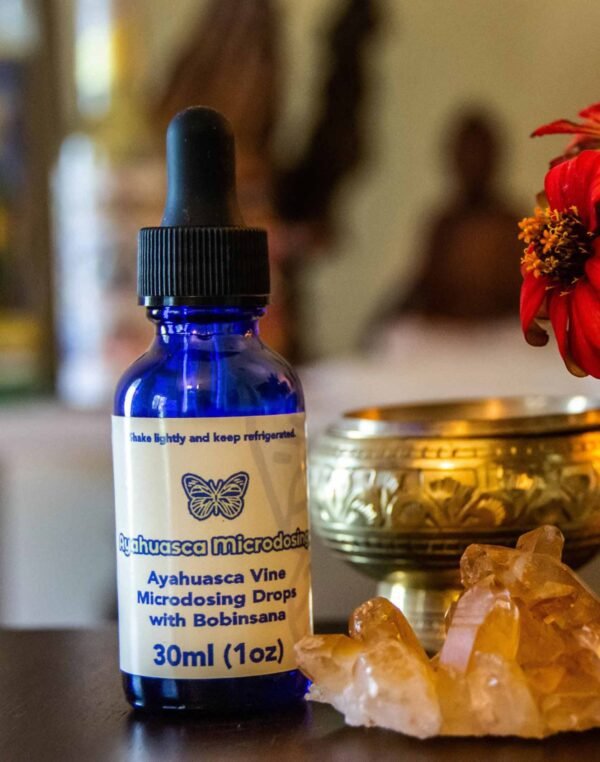
$130.99
Microdosing ayahuasca is a topic that has attracted attention in discussions about psychedelics, traditional plant medicines, consciousness research, and emerging mental-health research. The term generally refers to consuming an amount of an ayahuasca preparation intended to produce subtle or minimally perceptible effects rather than the pronounced altered state traditionally associated with ayahuasca ceremonies.
Despite growing public interest, microdosing ayahuasca remains poorly understood scientifically. There is considerably less controlled research on ayahuasca microdosing than there is on conventional ayahuasca experiences or other forms of psychedelic research. Claims about improved mood, creativity, focus, emotional wellbeing, or productivity should therefore be distinguished from findings established through controlled clinical research.
Ayahuasca is also pharmacologically complex. Unlike a single-compound psychedelic, traditional ayahuasca preparations generally contain a combination of psychoactive compounds, including DMT and beta-carboline alkaloids such as harmine, harmaline, and tetrahydroharmine. The composition can vary substantially between preparations, making the term “microdose” difficult to define consistently.
This guide explains what microdosing ayahuasca means, how ayahuasca works pharmacologically, what researchers know about potential effects, what remains uncertain, and why safety considerations are particularly important.
Ayahuasca is a psychoactive preparation traditionally associated with Indigenous and syncretic religious practices in parts of the Amazon basin. Traditional preparations can contain plants that contribute DMT together with plants containing beta-carboline alkaloids.
The chemistry of ayahuasca is important because DMT by itself is normally metabolized rapidly when taken orally. Beta-carboline compounds can inhibit certain monoamine oxidase enzymes, changing the way DMT is metabolized and allowing it to produce psychoactive effects when consumed orally.
Ayahuasca therefore should not be considered equivalent to isolated DMT.
Its effects can depend on:
This variability becomes particularly relevant when people use the term “microdosing.”
Microdosing ayahuasca generally refers to consuming a small amount intended to produce limited or barely noticeable psychoactive effects.
However, there is no universally accepted scientific definition of an ayahuasca microdose.
This is an important distinction because informal descriptions of microdosing can differ substantially. A quantity that produces minimal subjective effects in one person may produce noticeable psychoactive effects in another, and the chemical composition of different ayahuasca preparations can also vary.
For that reason, claims that a particular amount consistently produces a specific psychological effect should be treated cautiously.
Traditional ayahuasca ceremonies can involve pronounced changes in perception, emotion, cognition, and bodily sensations. Microdosing is conceptually different because the intention is generally to avoid a substantial altered state.
The distinction can be summarized as:
| Feature | Microdosing concept | Conventional ayahuasca experience |
|---|---|---|
| Intended intensity | Subtle or minimally perceptible | Potentially pronounced |
| Altered perception | Intended to be limited | Can be substantial |
| Research evidence | Limited | Growing but still developing |
| Chemical variability | Important consideration | Important consideration |
| Traditional context | Not necessarily traditional | Often connected to ceremonial traditions |
| Safety concerns | Still present | Still present |
A smaller amount does not automatically mean that a substance is risk-free.
Ayahuasca chemistry is one of the reasons microdosing research is complicated.
Traditional preparations may contain several pharmacologically active compounds. The principal substances commonly discussed include DMT, harmine, harmaline, and tetrahydroharmine.
N,N-dimethyltryptamine, commonly called DMT, is a powerful serotonergic psychedelic. It interacts with several serotonin receptors and is associated with profound changes in perception, cognition, and subjective consciousness at psychoactive exposure levels.
DMT is one of the primary compounds responsible for the psychedelic effects associated with ayahuasca.
Harmine and harmaline are beta-carboline alkaloids associated with monoamine oxidase inhibition.
Their presence is pharmacologically important because monoamine oxidase plays a role in the metabolism of several neurotransmitters and compounds, including DMT.
Tetrahydroharmine, often abbreviated THH, is another beta-carboline found in some ayahuasca preparations.
Its pharmacology differs from that of DMT and the other beta-carbolines, adding another layer of complexity to the overall pharmacological profile of ayahuasca.
Ayahuasca can affect several neurotransmitter systems, with serotonin signaling being particularly important.
DMT has activity at multiple serotonin receptors, including the 5-HT2A receptor, which is strongly associated with the effects of classical psychedelics.
Beta-carbolines can influence monoamine metabolism through monoamine oxidase inhibition.
The resulting pharmacology is more complicated than simply describing ayahuasca as a “DMT experience.”
Researchers are studying how these compounds may influence:
However, findings from laboratory studies and full-dose psychedelic research should not automatically be interpreted as evidence that microdosing produces the same effects.
People who report microdosing ayahuasca sometimes describe subtle changes in areas such as mood, attention, creativity, emotional awareness, or subjective wellbeing.
These reports are interesting but should not be confused with established clinical evidence.
Potentially reported experiences include:
Individual responses can vary considerably.
Some people may experience no noticeable effects, while others may experience anxiety, nausea, dizziness, perceptual changes, or other unwanted effects.
Mood improvement is one of the commonly discussed reasons for interest in psychedelic microdosing.
However, evidence specifically supporting ayahuasca microdosing for mood improvement remains limited.
Research involving ayahuasca more broadly has investigated possible effects on depression, anxiety, emotional processing, and other psychological outcomes. These studies generally involve particular research conditions and should not be generalized automatically to informal microdosing.
There is also an important methodological issue: subjective expectations can influence how people perceive the effects of psychedelic substances.
Controlled studies are needed to determine whether reported benefits result primarily from pharmacological effects, expectancy, environmental factors, behavioral changes, or a combination of these influences.
Claims about increased focus, productivity, creativity, or motivation are frequently associated with psychedelic microdosing discussions.
Scientific evidence for these claims is not conclusive.
Microdosing studies involving psychedelics more broadly have produced mixed findings, and the research specifically examining ayahuasca microdosing is comparatively limited.
Factors such as expectations, sleep, lifestyle changes, and increased attention to personal goals may contribute to perceived improvements.
Consequently, statements that ayahuasca microdosing reliably improves concentration or productivity should be regarded as claims requiring further evidence rather than established facts.
Creativity is another frequently discussed subject.
Psychedelic research has examined cognitive flexibility, associative thinking, divergent thinking, and changes in perception. Some studies suggest psychedelics may influence aspects of cognition associated with creative processes.
However, creativity is multidimensional.
Being more open to unusual ideas does not necessarily mean producing better creative work. Research must distinguish between subjective feelings of creativity and measurable changes in creative performance.
There is currently insufficient evidence to conclude that ayahuasca microdosing reliably enhances creativity across individuals.
Some people describe psychedelics as increasing awareness of emotions or personal thoughts.
Ayahuasca research has investigated emotional processing and subjective psychological experiences, particularly in traditional and therapeutic research contexts.
Nevertheless, emotional intensity can be unpredictable.
A person expecting a subtle experience may instead experience uncomfortable thoughts, anxiety, confusion, or perceptual changes.
Microdosing should therefore not be assumed to produce only positive psychological effects.
Microdosing does not eliminate the pharmacological risks associated with ayahuasca.
Potential risks can include:
The magnitude of these effects can vary substantially.
The chemical variability of ayahuasca preparations is another concern because the contents may not be standardized in the same way as pharmaceutical products used in clinical research.
One of the most important safety considerations associated with ayahuasca is the presence of beta-carboline compounds capable of inhibiting monoamine oxidase.
Monoamine oxidase is involved in the metabolism of several biologically active substances.
Because of this pharmacological activity, ayahuasca can interact with medications and other substances.
This means that microdosing ayahuasca should not be treated as equivalent to microdosing a single psychedelic compound.
Interactions between ayahuasca and antidepressant medications require particular caution.
Different antidepressants affect neurotransmitter systems in different ways, and some combinations involving serotonergic substances can potentially create serious adverse effects.
People taking prescription medications should not assume that a low-intensity psychedelic exposure is automatically compatible with their medication.
Anyone taking antidepressants or other prescription drugs should discuss potential interactions with a qualified healthcare professional rather than relying on online dosing or compatibility charts.
Serotonin syndrome is a potentially serious condition associated with excessive serotonergic activity.
Symptoms can include combinations of:
Severe cases can become medical emergencies.
Because ayahuasca contains compounds that influence monoamine metabolism and serotonergic signaling, interactions with other serotonergic substances deserve particular attention.
Potential interactions can extend beyond antidepressants.
Medication interactions can depend on:
People should not assume that a medication is safe to combine with ayahuasca simply because an interaction is not widely discussed online.
Professional medical advice is particularly important for people taking psychiatric medications, cardiovascular medications, stimulants, or other drugs that affect neurotransmitters or blood pressure.
Even when someone is seeking subtle effects, ayahuasca can produce physical changes.
Reported physical effects include:
The traditional association between ayahuasca and vomiting is sometimes discussed in spiritual or ceremonial terms, but from a physiological perspective vomiting is also a physical effect that can contribute to dehydration and other complications.
Psychedelic experiences can produce psychologically challenging reactions.
Potential problems include:
People with certain psychiatric conditions may face additional concerns.
Because individual medical and psychiatric histories differ, generalized statements that ayahuasca is psychologically safe for everyone are inappropriate.
Research into psychedelics and mental health is expanding, but research participants are typically selected using specific inclusion and exclusion criteria.
Results from clinical studies therefore cannot automatically be generalized to everyone.
People with a history of serious psychiatric illness should obtain individualized professional guidance before considering psychoactive substances.
This is especially important when medications are involved.
Although microdosing is generally intended to minimize noticeable psychedelic effects, individual responses can vary.
Unexpected perceptual changes may occur depending on the preparation, individual sensitivity, and other factors.
A person should not assume that a preparation labeled as a “microdose” will necessarily produce the same experience every time.
This is another reason why informal terminology should not be treated as a standardized scientific measurement.
Unlike standardized pharmaceutical products, traditional or informal ayahuasca preparations may vary in chemical composition.
Differences can arise from:
Consequently, two preparations described using the same general name may not have identical chemical profiles.
Appearance alone cannot reliably establish the chemical composition of an ayahuasca preparation.
Color, thickness, smell, and other physical characteristics do not provide definitive information about the concentration of DMT or beta-carboline alkaloids.
Laboratory analytical methods are considerably more reliable for chemical identification.
Scientific analysis can involve techniques such as chromatography and mass spectrometry to identify and quantify chemical constituents.
Laboratory testing can help researchers determine:
This type of analysis is especially important for scientific research because researchers need to understand what participants were actually exposed to.
Ayahuasca has become an increasingly important subject of scientific research.
Researchers have investigated:
Some studies have reported potentially interesting psychological or neurological findings.
However, research remains an evolving field.
Studies vary in sample size, methodology, preparation composition, participant characteristics, and outcome measurements.
Research specifically examining microdosing ayahuasca is much more limited than research examining ayahuasca experiences at higher psychoactive exposure levels.
This distinction is critical.
Evidence about conventional ayahuasca experiences cannot automatically establish that microdosing has the same biological or psychological effects.
More controlled research would be needed to determine:
One of the major challenges in microdosing research is separating pharmacological effects from expectancy effects.
If someone strongly expects a substance to improve mood, creativity, focus, or wellbeing, those expectations can influence subjective reports.
Well-designed controlled studies can help researchers distinguish between:
This is particularly important when evaluating claims based primarily on personal anecdotes.
Ayahuasca has deep cultural and religious significance in several Indigenous and syncretic traditions.
Traditional practices vary between communities and should not be reduced to modern discussions of “microdosing.”
Ceremonial use can involve:
Modern interest in ayahuasca sometimes separates the substance from these cultural contexts.
Understanding the historical and cultural background can provide a more complete picture of ayahuasca beyond its pharmacology.
These are not necessarily the same practice.
Traditional ceremonial ayahuasca use can involve specific cultural frameworks, rituals, beliefs, and social settings.
Modern microdosing discussions often focus instead on perceived productivity, mood, creativity, or personal experimentation.
Treating the two as interchangeable can overlook important cultural and historical differences.
There is not enough evidence to describe ayahuasca microdosing as universally safe.
Several factors complicate safety assessment:
The absence of large numbers of documented problems should not be interpreted as proof of long-term safety.
A serious reaction involving a psychoactive substance can require urgent medical attention.
Warning signs can include:
If a person develops severe or rapidly worsening symptoms after taking a psychoactive substance, emergency medical assistance should be sought.
Providing healthcare professionals with accurate information about substances and medications involved can help them assess the situation.
The safety of ayahuasca exposure during pregnancy has not been established.
Because ayahuasca contains pharmacologically active compounds that can affect neurotransmitter systems and cardiovascular physiology, pregnancy represents an important situation requiring medical caution.
People who are pregnant, planning pregnancy, or breastfeeding should discuss psychoactive substance exposure with a qualified healthcare professional.
Ayahuasca does not fit neatly into the same dependence profile as substances that commonly produce strong physical dependence.
However, this does not mean that psychological or behavioral problems are impossible.
Repeated use can become part of a person’s behavior or coping strategy, particularly if they begin relying on a substance to manage mood, stress, productivity, or emotional difficulties.
Research into the long-term effects of repeated ayahuasca microdosing remains limited.
The legal status of ayahuasca varies considerably by country and jurisdiction.
Legal considerations can involve the status of:
A legal framework applicable in one country may not apply elsewhere.
Anyone researching ayahuasca should consult current laws and official government sources for the relevant jurisdiction.
Scientific research involving controlled substances generally requires appropriate institutional, ethical, and regulatory oversight.
Researchers may need authorization relating to:
Research conditions are therefore substantially different from informal use.
A smaller intended exposure does not eliminate pharmacological activity or potential interactions.
Natural substances can contain powerful biologically active compounds.
Ayahuasca’s MAOI-related pharmacology demonstrates why natural origin does not automatically indicate safety.
Individual responses vary considerably.
Chemical variability between preparations adds another source of uncertainty.
Research into psychedelics is expanding, but evidence specifically supporting broad claims about ayahuasca microdosing remains limited.
Ayahuasca is pharmacologically more complex than isolated DMT because preparations commonly contain multiple active compounds.
Microdosing ayahuasca generally refers to consuming an amount intended to produce subtle or minimally perceptible effects rather than a pronounced psychedelic experience. There is no universally accepted scientific definition of an ayahuasca microdose.
It may produce subtle psychological or perceptual effects in some people, while others may experience little noticeable change. Responses depend on individual and preparation-related factors.
Traditional ayahuasca preparations commonly contain DMT-containing plant material together with plants containing beta-carboline alkaloids, although composition varies.
Beta-carboline alkaloids such as harmine and harmaline can inhibit monoamine oxidase enzymes. This is pharmacologically important because it affects the metabolism of DMT and other compounds.
There is insufficient evidence to conclude that ayahuasca microdosing reliably improves focus or productivity.
Research has investigated ayahuasca and depression, but findings from clinical or observational research should not be interpreted as proof that informal microdosing is a treatment for depression.
Yes. Because ayahuasca contains compounds that influence monoamine metabolism and serotonergic signaling, interactions with medications can be clinically important.
Different plants, plant parts, growing conditions, preparation practices, and concentrations can result in substantially different chemical profiles.
No. Appearance cannot reliably establish the concentration or identity of active compounds.
Research specifically focused on ayahuasca microdosing is relatively limited compared with research on ayahuasca more broadly and other psychedelic compounds.
Its legal status varies by jurisdiction and can depend on the chemical constituents, religious context, and applicable controlled-substance laws.
Several important questions remain open.
Researchers need better evidence concerning:
Answering these questions requires carefully designed scientific studies rather than relying exclusively on anecdotal reports.
Anyone researching the subject should keep several principles in mind.
First, microdosing is not a standardized pharmaceutical concept when applied to ayahuasca. Different preparations can contain different concentrations and combinations of active compounds.
Second, MAOI activity is an important pharmacological consideration. It means that interactions with medications and other substances deserve particular attention.
Third, research findings should be interpreted according to the specific study design. Evidence from conventional ayahuasca experiences does not automatically establish the effects of microdosing.
Finally, traditional ayahuasca use has cultural and religious dimensions that extend beyond modern microdosing discussions.
Microdosing ayahuasca refers broadly to an approach intended to produce subtle effects rather than a pronounced psychedelic experience. However, there is no universally accepted scientific definition of an ayahuasca microdose.
Ayahuasca is pharmacologically complex. Preparations may contain DMT together with beta-carboline alkaloids such as harmine, harmaline, and tetrahydroharmine. The interaction between these compounds is central to ayahuasca’s pharmacology.
Scientific interest in ayahuasca includes research into consciousness, emotional processing, brain activity, mental health, and other areas. However, evidence specifically supporting broad claims about microdosing ayahuasca remains limited.
Potential concerns include psychological reactions, physical effects, variable chemical composition, and interactions with medications. MAOI-related interactions are particularly important.
Understanding ayahuasca therefore requires looking beyond claims about productivity or wellbeing and considering its chemistry, research evidence, cultural context, safety considerations, and legal environment.
This information is provided for educational and research-information purposes only. It is not medical advice and should not be interpreted as a recommendation to use ayahuasca or any psychoactive substance. Ayahuasca can contain pharmacologically active compounds and may interact with medications or health conditions. Laws vary by jurisdiction. For personal health questions or medication interactions, consult a qualified healthcare professional and relevant official authorities.
Microdosing typically involves taking sub-perceptual (very low) doses of a substance to potentially gain benefits such as increased creativity, mood enhancement, or mental clarity—without experiencing intense psychedelic effects. Some microdosing products on the market use only the Banisteriopsis caapi vine, which contains harmala alkaloids Monoamine oxidase inhibitors (MAOIs) but not DMT.


Reviews
There are no reviews yet.