
Online Psychedelic Shop
If you are new to the subject of psychedelics, the terminology can quickly become confusing. Words such as psychedelic, hallucinogen, psychoactive, dissociative, entheogen, microdosing, set and setting, and psychedelic-assisted therapy are often used together even though they do not mean the same thing.
Psychedelics are a diverse group of psychoactive substances that can produce substantial changes in perception, thinking, emotions, sensory processing, and the experience of consciousness. Some occur naturally in plants or fungi, while others are synthesized in laboratories.
The subject has attracted attention for thousands of years because of traditional and ceremonial practices involving certain plants and fungi. More recently, psychedelics have become an important area of modern scientific research, particularly in neuroscience, psychiatry, psychology, pharmacology, and consciousness studies.
However, growing scientific interest should not be confused with proof that every psychedelic substance is safe or effective for every person. Psychedelic experiences can be unpredictable, some substances remain illegal or tightly controlled, and clinical research is conducted under conditions that are very different from unsupervised use.
This beginner’s guide explains the fundamentals of psychedelics in straightforward language, including what they are, how they differ from other psychoactive substances, the major psychedelic compounds, how they affect the brain, what psychedelic experiences can involve, current research, potential risks, and the importance of accurate information, you can click here to visit our shop.
Psychedelics are psychoactive substances that can produce significant changes in perception, cognition, emotion, and consciousness.
The word psychoactive simply means that a substance affects the brain or nervous system and can change mental processes or behavior.
Classic psychedelics are particularly associated with changes in:
Some of the best-known classic psychedelics include:
Although these substances are grouped together, they are not identical. They have different chemical structures, pharmacological properties, durations, histories, legal classifications, and research findings.
That distinction is important for beginners.
There is no single substance called “the psychedelic.” Psychedelics are a broad family containing substances with both similarities and important differences.
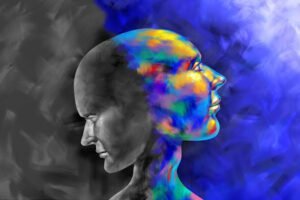
The term psychedelic is commonly used to describe substances capable of producing profound changes in consciousness and perception.
The word comes from Greek roots commonly translated as something similar to “mind manifesting.”
The term became especially prominent during the twentieth century, although human relationships with psychedelic plants and fungi are much older.
Today, “psychedelic” is used in several different contexts:
The scientific meaning is generally narrower than the way the word is sometimes used online.
Not exactly.
Hallucinogen is a broader term used for substances capable of producing significant alterations in perception.
Psychedelics are often classified as a subgroup of hallucinogens, particularly the classic serotonergic psychedelics.
However, not every substance historically described as a hallucinogen produces the same type of altered state.
For example, psychedelics, dissociatives, and deliriants can all produce unusual perceptual experiences, but their pharmacology and subjective effects can be very different.
This is why simply calling every perception-altering substance a “hallucinogen” can hide important scientific distinctions, you can click here to visit our shop.
A psychoactive substance is a chemical that affects the central nervous system and can change mental processes.
Psychoactive substances include many very different categories.
Examples include:
Being psychoactive does not automatically mean that a substance is a psychedelic.
This distinction is one of the first concepts beginners should understand.
Psychoactive substances can be divided into several broad categories.
Classic psychedelics are strongly associated with changes in perception, cognition, emotion, and consciousness.
Common examples include:
Many classic psychedelics interact with serotonin receptors, especially the 5-HT2A receptor.
Dissociative substances can produce feelings of detachment from the body, surroundings, or ordinary perception.
Their pharmacology differs from that of classic psychedelics.
Examples discussed in scientific literature include ketamine and other NMDA-receptor-related compounds.
Deliriants can produce severe confusion, disorientation, memory impairment, and altered perception.
They should not be casually grouped together with classic psychedelics simply because both categories can affect perception.
Substances such as MDMA are often discussed alongside psychedelics but have distinct pharmacological characteristics.
MDMA is generally classified as an empathogen or entactogen rather than a classic psychedelic.
This distinction becomes particularly important when reading clinical research.
Psychedelic compounds can originate from natural organisms or be synthesized.
Examples include compounds associated with:
Natural origin does not automatically mean that a substance is safe.
Nature contains many biologically active compounds, including substances that can be poisonous or dangerous.
Synthetic psychedelics are produced through chemical synthesis.
LSD is one well-known example.
Synthetic does not automatically mean more dangerous, and natural does not automatically mean safer. Safety depends on pharmacology, concentration, contaminants, individual factors, interactions, and many other variables.
Psilocybin is a naturally occurring psychedelic compound found in certain fungi.
After entering the body, psilocybin is converted into psilocin, which is pharmacologically active.
Psilocybin has become one of the most extensively researched psychedelic compounds in modern clinical science.
Researchers have investigated it in relation to:
Research findings are promising in some areas but should not be interpreted as evidence that psilocybin is universally safe or effective.
Clinical research involves carefully selected participants, controlled environments, standardized procedures, and professional monitoring.
LSD stands for lysergic acid diethylamide.
It is a potent synthetic psychedelic that has played a significant role in the history of psychedelic science.
Research into LSD has examined:
LSD is highly potent and is controlled by law in many jurisdictions.
Its effects can involve substantial changes in sensory processing, thought patterns, emotions, and time perception.
DMT stands for N,N-dimethyltryptamine.
It is a naturally occurring psychedelic compound found in various plants and has also been synthesized for scientific purposes.
DMT is particularly notable for the intensity of the altered states associated with it and has become an important subject in consciousness research.
Scientists have investigated questions involving:
DMT is also associated with ayahuasca, a traditional preparation containing DMT and other compounds.
Mescaline is a naturally occurring psychedelic compound associated with certain cactus species.
It has a long history of ceremonial and cultural use, particularly among Indigenous communities in the Americas.
Modern scientific interest includes:
Understanding mescaline requires both scientific and cultural context.
One of the most important questions in psychedelic science is how these compounds change brain activity.
Classic psychedelics interact with serotonin receptors, particularly 5-HT2A receptors.
Serotonin is a neurotransmitter involved in numerous neurological functions, including:
When psychedelic compounds alter serotonin signaling, they can influence neural circuits involved in perception and cognition.
However, the effects are much more complicated than simply “increasing serotonin.”
Psychedelics can affect communication between brain networks, alter sensory processing, and change the way information is integrated.
The 5-HT2A receptor is a serotonin receptor found in several areas of the brain.
It has become one of the most important targets in psychedelic neuroscience because many classic psychedelics interact with this receptor.
Scientists study 5-HT2A receptors to better understand:
Research into this receptor has helped scientists develop more detailed models of how psychedelic states arise.
However, no single receptor provides a complete explanation of the psychedelic experience.
The brain is not simply a collection of isolated regions.
Different areas communicate through networks that contribute to processes such as:
Psychedelics can temporarily change communication patterns among these networks.
Researchers have used brain-imaging technologies to investigate these changes.
One area of interest is the default mode network, which is associated with self-referential processing and other aspects of internally directed thought.
Changes in activity and connectivity involving this network have contributed to scientific discussions about altered self-perception during psychedelic states.
Psychedelics can change the way sensory information is processed.
Potential perceptual changes include:
These effects are not necessarily identical between people.
Some individuals may experience predominantly visual changes, while others report stronger emotional or cognitive effects.
The experience can also change throughout the same session.
Altered time perception is frequently reported with psychedelic states.
Minutes may seem unusually long or short, while events can feel difficult to place within an ordinary timeline.
Researchers are interested in this phenomenon because our normal experience of time depends on multiple interacting brain processes.
Changes in attention, memory, sensory processing, and emotional intensity may all contribute to altered time perception.
Another important area of psychedelic research involves the sense of self.
Under ordinary circumstances, people generally experience themselves as a continuous individual with a stable identity and personal history.
During psychedelic states, some individuals report changes in this experience.
Descriptions may include:
Researchers sometimes refer to extreme forms of this phenomenon as ego dissolution.
This is an area of active scientific research and should not automatically be interpreted as either beneficial or harmful.
Ego dissolution describes a temporary reduction or alteration in the ordinary sense of having a distinct, separate self.
Reports can range from mild changes in identity to profound alterations in self-awareness.
Researchers are investigating whether changes in self-processing may be relevant to certain therapeutic models.
However, an intense alteration in self-perception can also be frightening or disorienting.
Context and individual psychological factors matter considerably.
Psychedelic experiences can involve unusually strong emotional responses.
People may report:
This variability is one reason psychedelic research pays attention to psychological preparation and environmental conditions.
A substance does not guarantee a particular emotional outcome.
Set and setting is one of the most commonly discussed concepts in psychedelic research.
“Set” generally refers to factors within the individual, such as:
“Setting” refers to external circumstances, including:
Researchers have long recognized that context can influence the subjective effects of psychoactive substances.
No.
This is an important misconception for beginners.
Psychedelic experiences can involve positive, neutral, mixed, or distressing experiences.
Potentially difficult experiences may include:
A person’s expectations can also differ substantially from the actual experience.
Scientific research therefore considers both potential benefits and potential harms.
“Bad trip” is an informal term for a distressing psychedelic experience.
It is not a precise scientific diagnosis.
A difficult experience may involve:
The term can oversimplify what is happening psychologically.
Researchers may instead discuss acute anxiety, challenging experiences, adverse psychological effects, or other specific symptoms.
There is no single duration for all psychedelics.
Different substances have different pharmacological profiles.
Duration can also vary because of:
For scientific purposes, researchers often distinguish between the beginning of effects, peak effects, overall acute effects, and after-effects.
Because different substances behave differently, information about one psychedelic should not automatically be applied to another.
Psychedelics primarily attract attention because of their psychological effects, but they can also produce physical changes.
Depending on the substance and circumstances, possible effects include:
The physical profile varies considerably between substances.
Potential psychological risks can include:
People with certain psychiatric vulnerabilities may face additional concerns.
This is one reason clinical research uses screening criteria rather than assuming that psychedelic effects are appropriate for everyone.
Most psychedelic effects are temporary, but researchers have documented cases involving longer-lasting psychological or perceptual symptoms.
One phenomenon discussed in medical literature is hallucinogen persisting perception disorder, sometimes abbreviated as HPPD.
It involves persistent or recurring perceptual disturbances following exposure to a hallucinogen.
The condition appears to be uncommon, but its exact causes, risk factors, and frequency remain subjects of scientific investigation.
Persistent or severe symptoms after exposure to a psychoactive substance warrant professional medical evaluation.
One of the fastest-growing areas of psychedelic science concerns mental health.
Researchers have investigated psychedelic compounds in connection with:
Clinical research involving psilocybin has received particular attention.
Researchers are also studying MDMA-assisted therapy, although MDMA is pharmacologically distinct from classic psychedelics.
It is essential to distinguish research findings from claims that a substance is already an established treatment in every setting.
Psychedelic-assisted therapy is a structured research or clinical model involving a psychoactive substance alongside psychological support.
A typical research framework can include:
The therapeutic model is therefore considerably more complicated than the idea of simply taking a psychedelic and expecting a particular psychological outcome.
Researchers are studying which components of these protocols contribute to observed outcomes.
Neuroplasticity refers to the brain’s capacity to change its connections and functional organization.
Some psychedelic compounds have been investigated for possible effects on cellular and synaptic processes associated with plasticity.
Laboratory research has examined:
These findings are scientifically interesting, but laboratory evidence does not automatically demonstrate a specific clinical benefit in humans.
More research is needed to understand how molecular findings translate into real-world outcomes.
Microdosing generally refers to the practice of taking a very small amount of a psychoactive substance with the intention of producing subtle effects rather than an intense altered state.
Microdosing has become a major topic in popular culture.
Scientific studies have examined claims involving:
However, research has also highlighted the importance of expectancy and placebo effects.
Claims made online about microdosing should therefore be evaluated against controlled scientific evidence.
Placebo and expectancy effects are particularly important in psychedelic research.
If someone strongly expects a substance to improve creativity, mood, or wellbeing, that expectation can influence subjective reports.
This makes properly controlled studies essential.
Researchers may use:
These methods help separate pharmacological effects from expectations.
Psychedelic science also includes research into substance-use disorders.
Researchers are investigating whether psychedelic-assisted approaches could eventually play a role in treating certain forms of addiction.
However, the existence of research does not mean that psychedelics are established treatments for addiction in every healthcare system.
Clinical evidence, regulatory approval, and professional guidelines must be considered separately.
Classic psychedelics are generally not associated with the same pattern of physical dependence seen with substances such as opioids.
However, that does not mean they are completely without risk.
Important considerations include:
Different psychedelic-related substances can have very different dependence profiles.
It is therefore misleading to treat every psychoactive substance as pharmacologically identical.
Tolerance occurs when repeated exposure to a substance produces a reduced response.
Classic psychedelics can produce tolerance, and this is one reason researchers distinguish psychedelic pharmacology from simple descriptions of “strong” or “weak” substances.
Tolerance is a biological phenomenon involving changes in receptor and neural responses.
It should not be confused with safety.
A reduction in subjective effects does not necessarily mean that a substance has become harmless.
Interactions between psychedelics and medications can be complicated.
Potential concerns may involve:
Some substances and medications can affect monoamine systems or metabolism in ways that may alter risk.
For this reason, people should not rely on generalized internet claims about whether two substances are safe to combine.
Ayahuasca is a traditional psychoactive preparation associated with Indigenous and religious traditions in parts of South America.
It is important to understand that ayahuasca is not simply another name for DMT.
Traditional ayahuasca preparations can contain DMT alongside compounds that affect its metabolism.
The cultural history of ayahuasca is extensive and cannot be reduced to its chemistry alone.
Modern researchers have studied ayahuasca in areas including:
Psychedelic substances have histories extending far beyond modern Western science.
Certain plants and fungi have been incorporated into traditional practices for generations.
Examples include traditions involving:
These traditions involve cultural, spiritual, social, and historical dimensions.
A complete understanding of psychedelics should therefore recognize both modern scientific research and the communities and cultures that have longstanding relationships with these substances.
Modern psychedelic research can involve several different methodologies.
Laboratory experiments can investigate:
Animal models can help researchers investigate biological mechanisms that cannot easily be studied in humans.
However, animal findings cannot automatically be generalized to human subjective experiences.
Researchers can use technologies such as:
These methods can help investigate changes in brain activity and connectivity.
Clinical trials can investigate potential therapeutic effects while monitoring participants for adverse events.
Study design is particularly important because expectations can strongly influence psychedelic experiences.
Beginners should look beyond headlines.
When reading a psychedelic study, consider:
A study involving healthy volunteers may not provide the same information as a study involving people with a particular medical condition.
Small studies can provide useful preliminary evidence but may have limitations.
Control groups help researchers determine whether observed effects are likely to be associated with the intervention.
Randomization can reduce certain sources of bias.
Peer review does not guarantee that a study is correct, but it provides an additional scientific evaluation process.
Replication is particularly important when evaluating extraordinary or controversial claims.
Personal experiences can be meaningful to the individual who experienced them, but anecdotes are not equivalent to controlled scientific evidence.
One person’s experience may be influenced by:
Anecdotal reports can generate research questions, but they cannot establish that a substance will produce the same outcome for everyone.
They are not.
Different compounds have different pharmacological and psychological profiles.
Natural origin does not guarantee safety.
Effects vary considerably. Some experiences involve changes in perception without conventional hallucinations.
They can produce significant psychological and physical effects.
Scientific conclusions generally require multiple studies and consistent evidence.
Scientific research and legal status are separate issues.
Individual experiences cannot establish universal safety.
The internet contains excellent scientific resources alongside inaccurate or commercially motivated claims.
When researching psychedelics, look for:
Be cautious with websites that:
A good educational resource should discuss both what researchers know and what remains uncertain.
The appearance, color, shape, or packaging of a substance cannot reliably establish its chemical identity.
Two visually similar substances can have completely different pharmacological properties.
Likewise, products sold under the same informal name may not necessarily contain the same compound.
Scientific chemical analysis is considerably more reliable than appearance-based identification.
This is an important public-health consideration when discussing unregulated psychoactive substances.
The laws surrounding psychedelics differ substantially across countries and sometimes between states, provinces, or municipalities.
A substance may be:
These categories are not interchangeable.
Legal frameworks also change over time, so old online articles may no longer accurately describe current law.
Anyone seeking legal information should consult current official government sources for their specific jurisdiction.
Legal status and health risk are separate concepts.
A legally available substance can still produce adverse effects.
Likewise, a controlled substance can still be scientifically valuable to study.
Researchers therefore evaluate pharmacology, toxicity, adverse events, interactions, and clinical outcomes separately from legal classification.
A responsible discussion of psychedelics should include both potential scientific benefits and potential risks.
Important considerations include:
People should seek professional medical advice when they have questions involving psychiatric conditions, medications, drug interactions, or persistent symptoms following psychoactive substance exposure.
Severe symptoms such as loss of consciousness, seizures, severe agitation, dangerous behavior, breathing problems, or suspected poisoning require urgent medical attention.
Psychedelic research is expanding across several scientific fields.
Future research may examine:
Scientists are also trying to determine which findings can be replicated and which early observations require additional evidence.
The field is therefore best understood as an evolving area of research rather than a collection of established answers.
Psychedelics are psychoactive substances capable of producing significant changes in perception, cognition, emotion, and consciousness. Classic examples include psilocybin, LSD, DMT, and mescaline.
Psychoactive substances are any substances that affect the brain and mental processes. Psychedelics are a more specific category within the larger group of psychoactive substances.
Many classic psychedelics interact with serotonin receptors, particularly 5-HT2A receptors. They can also alter communication among brain networks involved in perception, attention, cognition, and self-processing.
Psilocybin, LSD, DMT, and mescaline are among the best-known classic psychedelics.
Both. Some psychedelic compounds occur naturally in fungi, plants, or cacti, while others are synthesized chemically.
Yes. Researchers are studying them in neuroscience, psychiatry, pharmacology, psychology, consciousness research, and other fields.
They can produce significant psychological effects, including both potentially positive and distressing experiences. Some compounds are also being studied in controlled clinical research for mental health conditions.
It is a structured therapeutic approach involving a psychedelic substance within a controlled research or clinical framework combined with psychological support.
Microdosing generally refers to taking a small amount of a psychoactive substance with the intention of producing subtle effects rather than a pronounced altered state. Scientific evidence regarding claimed benefits remains an active research topic.
Yes. Anxiety and panic can occur during psychedelic experiences, particularly when psychological or environmental factors contribute to a difficult experience.
Classic psychedelics generally do not have the same physical dependence profile as opioids or some other drugs, but they are not risk-free and different psychoactive substances have different dependence characteristics.
It depends on the substance and jurisdiction. Laws vary considerably and can change over time.
Yes. Alterations in consciousness are one of the central characteristics studied in psychedelic neuroscience.
They provide researchers with a way to investigate perception, self-awareness, brain-network communication, consciousness, and other aspects of human cognition.
A psychoactive substance capable of producing substantial changes in perception, cognition, emotion, and consciousness.
A substance that affects the brain and can alter mental processes or behavior.
A broad term for substances that can significantly alter perception.
A neurotransmitter involved in numerous brain and bodily processes.
A serotonin receptor strongly associated with the effects of many classic psychedelics.
A naturally occurring psychedelic compound found in certain fungi.
The pharmacologically active compound produced when psilocybin is metabolized.
A potent synthetic psychedelic compound.
A naturally occurring psychedelic compound also produced synthetically for research.
A naturally occurring psychedelic compound associated with certain cactus species.
A term describing the psychological state of the individual and the surrounding environment.
A temporary alteration or reduction in the ordinary sense of a distinct self.
A term generally used for taking a small amount of a psychoactive substance with the intention of producing subtle rather than pronounced effects.
The brain’s ability to change its structure and functional organization.
A structured therapeutic or research approach involving a psychedelic substance and psychological support.
A change associated partly with expectations rather than the specific pharmacological action of an intervention.
If you are completely new to psychedelics, the most important concepts to remember are:
Psychedelics are a fascinating and complex subject spanning chemistry, neuroscience, psychology, medicine, anthropology, history, and philosophy.
For beginners, the most important step is to understand that there is no single psychedelic experience and no universal psychedelic effect. Different substances interact with the brain in different ways, and individual responses can vary considerably.
Modern research has provided new insights into serotonin receptors, brain-network communication, perception, consciousness, neuroplasticity, and potential therapeutic applications. At the same time, important questions remain about long-term effects, individual risk factors, clinical effectiveness, and how psychedelic research can be translated into responsible medical practice.
A reliable understanding of psychedelics therefore requires looking beyond promotional claims or personal anecdotes. Scientific studies, clinical evidence, pharmacology, cultural history, safety information, and current legal frameworks all contribute to a more complete picture.
As research continues, psychedelics are likely to remain an important subject of scientific investigation. For anyone beginning to explore the topic, learning the fundamentals first provides a much stronger foundation for understanding individual substances, emerging research, and the ongoing discussion surrounding psychedelic science, you can click here to visit our shop.

